
Aphasia Picture Cards PDF Free: A Comprehensive Guide
Navigating aphasia therapy often involves resourceful tools, and freely available PDF picture cards are invaluable assets for individuals and clinicians alike, fostering communication skills․
What is Aphasia?
Aphasia is an acquired communication disorder that impacts an individual’s ability to comprehend or formulate language, stemming from damage to the language centers of the brain․ This impairment can manifest in various ways, affecting speaking, writing, reading, and understanding spoken language․ It’s crucial to understand that aphasia isn’t a cognitive decline; individuals retain their intelligence, but accessing and utilizing language becomes challenging․
The severity of aphasia varies greatly, ranging from mild difficulties retrieving words to complete loss of language abilities․ It often occurs after stroke or traumatic brain injury, but can also result from brain tumors or neurodegenerative diseases․ Effective communication strategies and therapies, including those utilizing picture cards, are vital for individuals navigating this condition․
Understanding the nuances of aphasia is paramount when selecting appropriate therapeutic tools, like picture cards, to address specific language deficits and promote recovery․
Types of Aphasia & Corresponding Card Needs
Different aphasia types necessitate tailored picture card approaches․ Broca’s aphasia, characterized by effortful, telegraphic speech, benefits from cards prompting naming and sentence construction․ Wernicke’s aphasia, marked by fluent but nonsensical speech and comprehension deficits, requires cards focusing on receptive identification and yes/no questions․
Global aphasia, the most severe form, impacts all language modalities, demanding simple, concrete images for basic identification․ Anomic aphasia, primarily affecting word retrieval, utilizes cards to elicit targeted vocabulary․ For individuals with milder deficits, cards can incorporate more complex scenes to encourage descriptive language․
Card sets should be adaptable, offering varying levels of difficulty․ Consider including both realistic images and symbolic representations to cater to individual preferences and cognitive abilities․ The goal is to stimulate language production and comprehension, fostering communication gains․
The Role of Picture Cards in Aphasia Therapy
Picture cards serve as versatile tools in aphasia therapy, bridging communication gaps and stimulating language recovery․ They provide a concrete, visual stimulus, bypassing some of the difficulties associated with abstract word retrieval․ These cards facilitate both receptive and expressive language exercises, adapting to varying levels of severity․
They’re particularly useful in passive vocabulary tests, assessing comprehension skills․ Cards can be employed to elicit naming responses, encouraging verbal expression․ Furthermore, they support the creation of simple sentences and narratives, rebuilding grammatical structure․
The visual nature of cards reduces cognitive load, allowing individuals to focus on language processing․ They offer a non-threatening, engaging format, promoting participation and motivation․ Effectively, picture cards are foundational for rebuilding linguistic competence․
Finding Free Aphasia Picture Card Resources
Locating accessible, cost-free resources requires exploring online databases, university websites, and specialized platforms offering downloadable PDF picture card sets for aphasia therapy․
Online Databases & Repositories
Several online platforms serve as valuable repositories for free aphasia picture cards in PDF format․ While a dedicated, centralized database specifically for aphasia cards is emerging, resourceful searching across broader speech therapy resource sites proves fruitful․ Many websites host collections contributed by speech-language pathologists (SLPs) and researchers, offering diverse card sets categorized by themes – objects, actions, emotions, and more․
Interactive interfaces, like application search points, provide access to numerous applications without requiring downloads, potentially including picture card sets․ However, verifying the source and clinical validity of cards found on general platforms is crucial․ University and research center websites (discussed in the next section) often provide more rigorously vetted resources․ Remember to prioritize materials created or endorsed by qualified professionals to ensure therapeutic effectiveness and accuracy․ Consistent exploration of these digital spaces will reveal a growing number of freely accessible tools․
University & Research Center Websites
Leading universities and research centers dedicated to neurological disorders frequently offer free aphasia resources, including downloadable picture card sets in PDF format․ Institutions in Russia, such as those involved in neuropsychological diagnostic method development, may publish materials, though often in Russian, requiring translation․ The Research Center of Neurology, for example, conducts studies on aphasia recovery factors (Belopasova A․V․, et al․) and potentially shares related resources․
These websites generally provide more reliable and clinically sound materials than general online databases, as they are often created by researchers and SLPs directly involved in aphasia therapy and investigation․ Look for publications or resource sections related to communication disorders or neuropsychology․ While direct PDF downloads aren’t always available, many sites offer printable materials or links to relevant databases․ Diligent searching within these academic domains can uncover valuable, free tools․
Specific Websites Offering Free PDFs
While a definitive, centralized repository is lacking, several websites curate or directly offer free aphasia picture card PDFs․ Many resources focus on communication aids for broader cognitive impairments, like dementia, but are adaptable for aphasia therapy․ These often include sets designed for matching and naming exercises, utilizing both realistic images and symbolic representations – crucial for varying cognitive levels․

Interactive platforms are emerging, providing access to applications instead of direct downloads, streamlining resource access․ However, identifying consistently updated, high-quality free PDFs requires careful searching․ Remember to evaluate the source’s credibility; materials from qualified speech-language pathologists are preferable․ Be aware that some resources may be older, potentially reflecting outdated therapeutic approaches․ Thoroughly review any downloaded PDF before clinical use to ensure appropriateness․
Utilizing Aphasia Picture Cards Effectively
Successful implementation hinges on thoughtful card selection, adapting exercises to individual needs, and creatively employing them for both receptive and expressive language stimulation․
Card Design Considerations (Symbols vs․ Realistic Images)
Choosing between symbolic representations and realistic images on aphasia picture cards is a crucial decision impacting therapeutic efficacy․ Some research, like that involving pseudoword matching, utilized cards with only symbols, demonstrating their potential for specific tasks․ However, the suitability depends heavily on the individual’s aphasia type and cognitive abilities․
Realistic images often provide more contextual cues, potentially aiding individuals with naming difficulties, especially in early stages of recovery; Conversely, symbols can reduce visual complexity, minimizing potential confusion for those with perceptual deficits or severe aphasia․ The level of abstraction inherent in symbols may also promote generalization, encouraging broader semantic access․
Ultimately, a balanced approach is often best․ A comprehensive set should include both types, allowing therapists to tailor exercises to the patient’s evolving needs․ Considering the patient’s pre-morbid literacy and visual processing skills is also paramount when selecting or creating card sets․ Careful design enhances engagement and maximizes therapeutic outcomes․
Matching & Naming Exercises
Picture card exercises, foundational in aphasia therapy, commonly employ matching and naming tasks to stimulate language retrieval․ Matching activities, as seen in studies involving pseudowords, can begin with simple object-to-object pairings, gradually increasing complexity to include function or category matching․ This builds associative strength and reinforces semantic understanding․
Naming exercises, conversely, directly target expressive language skills․ Therapists present a card and prompt the individual to verbally identify the depicted item․ Errorless learning techniques, providing cues as needed, are often incorporated to foster success and minimize frustration․ Variations include providing initial sounds or semantic categories to aid recall․
Progressive difficulty is key․ Start with highly familiar objects, then introduce less common items․ Combining matching and naming – for example, matching a picture to its written label and then naming it – creates a multi-sensory, reinforcing experience․ These exercises are adaptable for various aphasia types and severity levels․
Creating Custom Card Sets
While numerous free aphasia picture card PDFs exist, tailoring sets to an individual’s life and interests significantly enhances therapeutic efficacy․ Customization allows for targeting specific vocabulary deficits and promoting engagement․ Begin by identifying frequently used objects, family members, or activities relevant to the person’s daily routine․
Photographs, rather than generic illustrations, can be particularly beneficial, triggering stronger personal connections and facilitating recall․ Consider incorporating pictures representing shared memories or significant life events․ Digital tools simplify card creation; images can be easily sourced and formatted into printable PDF layouts․
Thematic sets – focusing on cooking, gardening, or hobbies – provide contextual cues and support semantic organization․ Regularly updating card sets maintains novelty and prevents plateauing․ Remember to balance familiar and challenging items, fostering both success and continued growth in language skills․
Advanced Techniques with Picture Cards
Beyond basic naming, picture cards facilitate complex tasks like semantic feature analysis, receptive testing, and even collaborative storytelling, boosting language recovery․
Using Cards for Receptive Language Testing
Picture cards prove exceptionally useful in assessing receptive language abilities, a crucial component of aphasia evaluation․ These tests, often passive, require the individual to demonstrate understanding rather than production․ A clinician presents a card and asks the patient to point to a matching item, or perform an action related to the image․
This method bypasses expressive difficulties, isolating comprehension deficits․ Several aphasia and language tests utilize this principle, examining competency in both receptive and expressive skills․ The simplicity of picture cards allows for adaptable testing, catering to varying levels of severity․
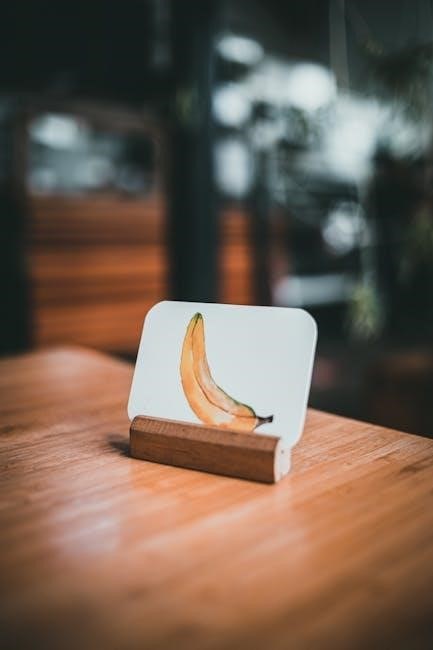
For instance, a card depicting an apple could prompt the patient to point to an apple amongst other fruits, or to ‘eat’ as if taking a bite․ Careful observation of responses reveals the extent of comprehension challenges, guiding targeted therapy interventions․ This approach offers a practical and insightful diagnostic tool․
Employing Cards in Semantic Feature Analysis
Semantic Feature Analysis (SFA) leverages picture cards to stimulate lexical retrieval and strengthen semantic networks in individuals with aphasia․ This technique involves presenting a picture – for example, a robin – and prompting the patient to generate associated features․ These features aren’t definitions, but descriptive attributes: color, function, category, or related items․
The clinician guides the process, encouraging detailed responses like “red,” “flies,” “bird,” or “worm․” SFA helps individuals access stored knowledge when direct word retrieval fails․ It’s particularly beneficial for those with anomic aphasia, where word-finding difficulties are prominent․
Using picture cards provides a concrete stimulus, reducing cognitive load․ The process strengthens connections between concepts and words, improving naming accuracy and overall language processing․ Repeated practice with SFA and picture cards can facilitate lasting improvements in semantic access․
Card-Based Storytelling & Narrative Tasks
Utilizing picture cards to construct narratives is a powerful therapeutic approach for individuals with aphasia, encouraging expressive language and cognitive skills․ A sequence of cards can serve as prompts, guiding the patient to create a story, describing the events, characters, and relationships depicted․
This task isn’t about perfect grammar; it’s about communication and rebuilding confidence․ Clinicians can start with simple sets of three cards, gradually increasing complexity․ Encourage details – “What is happening here?” “What might happen next?” – to stimulate language production․
Card-based storytelling enhances sequencing abilities, improves sentence formulation, and promotes overall narrative coherence․ It provides a supportive framework, reducing the pressure of spontaneous speech and fostering successful communication experiences; Free PDF card sets offer accessible tools for this engaging therapy․

Research & Publications Related to Picture Cards & Aphasia
Studies by Belopasova A․V․ and colleagues, alongside neuropsychological guides, highlight the efficacy of visual aids like picture cards in aphasia recovery and diagnosis․
Russian Language Journals & Research (Belopasova A․V․, et al․)
Significant research concerning aphasia and recovery factors originates from Russian-language publications, notably contributions from Belopasova A․V․, Kadykov A․S․, Shahparonova N․V․, Kashina E․M․, and Berdnikovich E․S․ at the Research Center of Neurology․ Their work, often published in peer-reviewed journals accessible without cost, investigates factors influencing aphasia recovery, providing valuable insights for therapeutic interventions․
These studies frequently explore diagnostic methods and the application of neuropsychological tools, including visual stimuli like picture cards․ While access may require translation, the findings contribute to a broader understanding of aphasia’s complexities․ Publications detail the use of card-based matching exercises and object recognition tasks, aligning with global therapeutic practices․ The journal itself is freely accessible, promoting knowledge dissemination within the field, and offering a rich resource for researchers and clinicians seeking innovative approaches to aphasia rehabilitation․
Studies on Recovery Factors in Aphasia
Research consistently demonstrates that recovery from aphasia is multifaceted, influenced by numerous neurological and cognitive factors․ Studies explore how targeted therapies, including those utilizing picture cards, impact language rehabilitation outcomes․ Investigations into receptive and expressive language skills often employ picture-vocabulary tests as diagnostic tools, assessing a patient’s ability to identify and name objects․
Card-based exercises, involving matching and naming, are frequently used to stimulate language pathways and promote neuroplasticity․ The effectiveness of these techniques is linked to the individual’s engagement and the specific type of aphasia․ Furthermore, research highlights the importance of early intervention and consistent practice․ The use of double-set card games, designed to enhance memory and association, also contributes to cognitive stimulation, potentially accelerating recovery and improving communication abilities․
Neuropsychological Diagnostic Methods & Guides
Comprehensive neuropsychological assessments are crucial for accurately diagnosing aphasia and guiding therapeutic interventions․ Practical guides detailing these methods, often published in Russian, provide clinicians with standardized procedures for evaluating language deficits․ These assessments frequently incorporate picture-based tasks, serving as a passive means to test receptive vocabulary and naming abilities․
Utilizing picture cards within these diagnostic frameworks allows for the assessment of semantic processing and lexical retrieval․ The interactive interfaces and application search points aid in accessing a wide range of diagnostic tools․ Such methods help determine the severity and type of aphasia, informing the selection of appropriate treatment strategies․ The first publication of practical guides in this format emphasizes the importance of a structured approach to neuropsychological diagnosis․